
Rodents at Home: Signs, the Diseases They Carry, and the Best Ways to Get Rid of Them
Technically reviewed by: Technical Department, German Quality
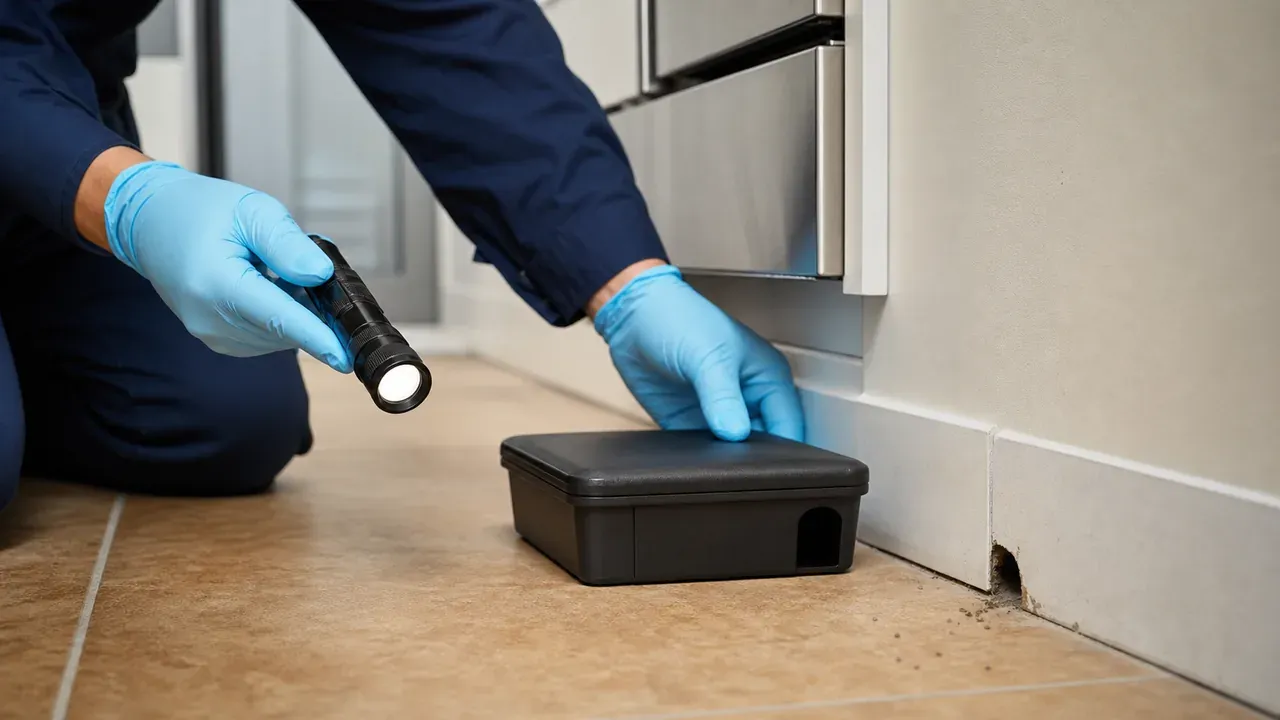
Rodents aren’t just an annoying guest; they’re a real hazard to your home’s health and property. They gnaw wires and cause faults and fires, contaminate food, carry serious diseases, and breed at a frightening rate if you delay. In this guide we’ll help you spot rodents early, understand their danger, and learn the best ways to get rid of them and prevent their return.
Signs of rodents in the home
The first step is to confirm you actually have rodents. The clearest signs of rodents:
- Small droppings near food, in cabinets, or along the walls.
- Scratching or scurrying sounds in the ceiling or behind cabinets at night.
- Gnawed things: wires, bags, cardboard, wood, or even plastic.
- Dark grease marks along the walls (a rodent walks the same path and its body leaves a trace).
- A sharp urine smell in corners and closed spaces.
- Nests of shredded paper or fabric in hidden, warm spots.
If you notice several of these, you’re facing an infestation that needs quick intervention before it breeds.
What mouse droppings look like (and how to tell them apart)
Many people search for mouse droppings or what rodent droppings look like, because it’s one of the most accurate signs:
- Size and shape: small grains 3–6 mm long, shaped like a rice grain but dark, and pointed at the ends.
- Color: dark (almost black) when fresh, lightening and crumbling when old.
- Location: gathered near food sources, in kitchen drawers, and along movement paths.
Identifying the droppings helps us know where rodents are active and place stations precisely. The amount also gives an idea of the infestation size.
Important: don’t touch the droppings with bare hands; use a glove and wipe the area with disinfectant, because it can carry disease.
What a mouse bite looks like
In rare cases a mouse may bite, especially if it feels threatened. A mouse bite usually looks like a small wound or two close points with redness, and can become inflamed. If bitten, wash the area well with soap and water and see a doctor, because rodent bites can transmit infection and need medical follow-up.
Common types of rodents in homes
In Egypt we usually meet two types:
- The house mouse (small): small in size, enters through the smallest gap, and nests inside the home near food.
- The rat (large): larger and stronger, gnaws harder things and enters via drains and pipes, and is more dangerous in shops and warehouses.
Each type has slightly different behavior, which affects the station placement and the way entries are sealed.
Causes of rodents entering the home
- Open gaps and entries: a rodent enters through a pencil-sized gap, around pipes, under doors, or AC openings.
- Available food: food scraps, exposed garbage, or open bags.
- Water and warmth: kitchens and bathrooms provide water and warmth.
- Clutter and neglected storage: stacked boxes and piled items provide ideal hideouts.
Understanding the cause makes treatment effective: not just getting rid of what’s present, but closing the door it enters through.
The diseases rodents carry (their health dangers)
One of the main reasons to act quickly is the diseases rodents carry:
- Contaminating food with their urine and droppings, causing stomach illness and food poisoning.
- Transmitting bacteria and parasites via touching surfaces and food.
- Allergies and respiratory issues from their droppings and fur, especially for children.
- In restaurants and shops, the presence of rodents is a health hazard and a violation before regulators.
Their damage to property
Beyond health, rodents cause material losses:
- Gnawing electrical wires, which can cause a short circuit and fire.
- Damaging furniture, clothes, books and boxes.
- Stock loss in shops and warehouses.
- Gnawing plastic pipes at times, and water leaks.
DIY mistakes with rodents
- Open poison on the floor: a hazard to children and pets, and the rodent may eat it and die in a hidden spot and smell.
- A single trap in a random spot: rodents are smart and learn to avoid traps if not placed correctly.
- Ignoring sealing entries: if you kill what’s present and leave the door open, new rodents enter.
- Ignoring cleanliness and storage: keeps the home attractive to rodents again.
Ways to get rid of rodents
Effective ways to get rid of rodents rely on an integrated plan, not one thing:
1) Inspection and identifying entries
We trace the movement paths and droppings and find every gap the rodent enters through, even small ones.
2) Sealing the gaps
We close entries with gnaw-resistant materials to stop new rodents, the most important part people skip.
3) Safe bait stations
We place bait in locked stations away from children and pets, right along the rodents’ path.
4) Follow-up (especially for shops)
For restaurants and shops, a monthly monitoring contract with a written report suitable for the health inspector.
That’s the difference between a lasting solution and one that returns after weeks. You can see the details of our rodent control service, the safe-station method and monitoring contracts.
Prevention (and smells that repel rodents)
Many ask about a smell that repels rodents as a natural solution. Some smells are said to bother rodents, like peppermint (peppermint oil) and cloves, and may help as a temporary repellent in small areas, but they’re not a radical solution for an existing infestation. Real prevention comes from:
- Sealing every gap around pipes, under doors and AC openings.
- Storing food in airtight containers and not leaving food exposed.
- Disposing of garbage promptly and not leaving it overnight.
- Organizing storage and not stacking boxes on the floor.
- Fixing water leaks that attract rodents.
The difference between the house mouse and the rat in detail
Identifying the type affects the station placement and the way entries are sealed:
- The house mouse (small): small, grey, with a long tail relative to its body. It enters through a pencil-sized gap, nests inside the home near food, and is curious so it approaches traps relatively easily.
- The rat (large): bigger and stronger, enters via drains, pipes and larger gaps, digs and climbs, and is more wary of new things. More dangerous in shops, warehouses and ground floors near the drainage.
Knowing the type makes the plan precise: the station type, its location, and the size of the gaps that must be sealed.
Rodent breeding speed: why time is a decisive factor
Rodents breed at a frightening rate. The female can have several litters a year, each with several young, and the young reach breeding age within a few weeks. This means two mice can become a colony in months.
The practical lesson: every week of delay makes the infestation bigger and the treatment harder. When you see the first sign, act, don’t wait to “see a few more.”
Rodent behavior: why they avoid the new
Rodents (especially rats) are wary of anything new in their environment (they take time before approaching a new trap or station). This explains why a single trap placed suddenly may not work quickly.
The professional handles this by:
- Placing stations on the actual movement paths (along the walls and near droppings and grease marks).
- Using a sufficient number of stations, not just one.
- Giving it time and following up.
That’s why experience in reading rodent behavior makes the difference in the result.
Rodents in restaurants, shops and health regulation
In restaurants, shops and warehouses, rodents aren’t just a stock loss, they’re a risk to the license and reputation. The health inspector looks for rodent signs, and their presence can expose the place to a violation or closure.
The professional solution is a periodic monitoring contract that includes:
- A map of the station locations around the place.
- Regular visits and a written report for each visit.
- Documentation suitable to present to health regulators.
This gives the shop owner peace of mind and protects their business. You can learn the details of rodent control and monitoring contracts.
How to seal rodent entries step by step
Sealing entries is the most important part that prevents rodents returning:
- Look for the gaps: around the kitchen and bathroom pipes, under doors, AC openings, and cable entry points.
- Measure the size: remember a house mouse enters through a pencil-sized gap, so even small gaps matter.
- Close with gnaw-resistant materials: compressed steel wire (wire wool) or metal materials, not just silicone alone because the rodent gnaws it.
- Check the doors: install seals under the exterior doors.
- Inspect after a while: confirm no new gaps have appeared.
Sealing entries without treatment traps what’s inside, and treatment without sealing lets new ones in, so both together.
Traps and bait stations: the difference and when to use each
- Bait stations (locked): a locked box with bait inside, safe for children and pets, suitable for areas with household movement.
- Mechanical traps (snap): catch the rodent instantly, useful when you want an immediate result or to avoid the rodent dying in a hidden spot.
- Glue traps: used with caution and in specific places.
The choice depends on the rodent type, the infestation location, and the presence of children/pets. The professional mixes methods depending on the case, and the most important thing is that the bait is in safe stations, not exposed on the floor.
Signs of rodents by location
- In the kitchen: droppings near food, gnawed bags, traces in drawers.
- In the ceiling/above the cabinet: scurrying sounds at night, droppings on high surfaces (a sign of a climbing rat).
- In the garden/ground floor: burrows in the soil near walls, paths in the plants.
- In the warehouse: gnawed stock, nests of paper and fabric, urine smell.
Identifying the location guides the station placement and entry sealing.
Cleanliness and storage: the first line of defense
Treatment removes what’s present, but cleanliness prevents the return:
- Store food in airtight containers and don’t leave food exposed at night.
- Dispose of garbage promptly and don’t leave it in the kitchen overnight.
- Organize storage and lift boxes off the floor.
- Clean under appliances and behind cabinets regularly.
- Fix water leaks that provide a drinking source for rodents.
A tidy home with food stored correctly is far less attractive to rodents.
Common myths about rodents
- “The cat will solve the problem”: it may reduce them, but it’s not a solution for a spread infestation, and rats are sometimes too big for a cat to handle.
- “Open poison is the fastest thing”: a hazard to children and pets, and makes the rodent die in a hidden spot.
- “One trap is enough”: rodents breed fast, and you need a plan, not one thing.
- “Peppermint smell will repel them for good”: it may bother them temporarily, it doesn’t treat an existing infestation.
When to call a professional
- You see rodents in the daytime (a sign of a large infestation).
- The droppings or traces are in more than one place.
- You have a food shop or warehouse and need documentation for regulators.
- You tried traps and poison and the problem persists.
In these cases, the integrated plan with a guarantee saves time and losses.
Practical steps the moment you discover a mouse at home
- Don’t panic and lay random poison: it may make it die in a hidden spot and smell.
- Identify the activity spots: look for droppings, the grease mark and gnawed things to know its path.
- Secure the food: close all food in airtight containers, and clean food scraps promptly.
- Close the obvious gaps initially around pipes and under doors.
- Call a specialist if there’s more than one sign or you have children/pets, for a safe and complete solution.
Rodents and electricity: the hidden fire hazard
One of the most dangerous rodent damages is gnawing the insulation of electrical wires. This can cause a short circuit and fire, a hazard often underestimated. If you notice repeated electrical faults or gnawed wires, treat it as a serious warning and don’t postpone.
How to clean safely after getting rid of rodents
- Wear a glove and don’t touch the droppings or nests with your hand.
- Spray the area with disinfectant and leave it for minutes before wiping, and don’t sweep dry so you don’t spread its particles into the air.
- Dispose of exposed food that may be contaminated.
- Wash any utensils that were exposed.
- Clean the hidden spots where there was activity.
When rodents increase during the year
Rodents look for warmth and food, so their attempts to enter homes increase in cold weather when they look for a warm shelter. They also increase near construction sites or exposed drainage. Knowing this helps you prepare and seal entries before the season.
The cost of rodent control: what determines the price
The price depends on:
- The infestation size and the area (apartment, villa, shop, warehouse).
- The rodent type (house mouse or rat).
- The number of entries needing sealing.
- The service type (a single visit or a monitoring contract for shops).
We inspect first and tell you the price before any work. For shops, the monitoring contract works out cheaper in the long run.
The difference in handling between a home and a shop
- The home: the focus is on sealing entries and safe stations away from children, and a quick solution.
- The shop, restaurant or warehouse: needs a periodic monitoring system with documentation, because the stock and health regulation require continuity. A monthly contract with a written report is the practical solution.
Each environment has its plan, and the inspection determines the most suitable.
Rodents and pets
If you have a cat or dog, be careful: open poison is a hazard to them, which is why we use locked stations. At the same time, leftover pet food can attract rodents, so keep it in an airtight container and don’t leave it out overnight.
Why do rodents come back after they disappear?
Many people get rid of what’s present and after a while they return. The reason is always one of two: either the entries are still open so new rodents entered, or the food and shelter source is still present so it attracted them again. That’s why the sustainable solution = treatment + sealing entries + cleanliness and proper storage + (for shops) follow-up. That’s what makes the result last instead of repeating.
Extra tips to prevent rodents returning
- Install metal mesh on ventilation openings and external pipes.
- Cut back trees and plants touching the walls that ease climbing.
- Remove construction debris and clutter from the home’s yard or roof.
- Check the garage and basement regularly because they’re common entries.
- In buildings, deal with it collectively because rodents move between units.
Frequently asked questions
How do I get rid of rodents for good?
Not with one thing, but with a plan: sealing entries + safe bait stations along the path + cleanliness and proper storage + follow-up. That’s what prevents their return.
Is mouse poison safe with children at home?
Open poison is a hazard. We use locked bait stations placed out of children’s and pets’ reach instead of open poison on the floor.
Could a rodent die in a hidden spot and smell?
It’s possible with any bait, but our experience in tracing paths reduces it, and sealing entries reduces the problem at its source.
I have a food shop, what’s the solution?
A monthly monitoring contract with a documented written report for each visit, suitable for the health inspector, along with sealing entries and safe stations.
Does peppermint smell really repel rodents?
It may bother them temporarily in a small area, but it doesn’t treat an existing infestation. The radical solution is the integrated plan.
Does the cat get rid of rodents?
A cat may reduce rodents or scare them, but it’s not a solution for a spread infestation, especially large rats. Also leftover cat food can attract rodents, so relying on the cat alone isn’t enough.
How small a gap does a rodent enter through?
The small house mouse enters through roughly a pencil-sized gap, and the rat through a slightly larger one. That’s why sealing even the small gaps around pipes is very important.
Do ultrasonic devices repel rodents?
Their results are limited and unreliable, and rodents adapt to them over time. The effective solution is sealing entries + safe bait stations + cleanliness, not a device alone.
I found a dead rodent, what do I do?
Wear a glove, put it in a sealed bag and dispose of it, and clean the area with disinfectant. If there’s a smell from a hidden spot, it’s usually a rodent that died inside, and we can help you locate it.
I have a garden, how do I prevent rodents?
Remove food scraps and garbage, close the burrows in the soil near the walls, cut back the touching plants, and install mesh on external openings. Ground floors and villas need more attention to the outer perimeter.
How long does getting rid of rodents take?
It depends on the infestation size and the number of entries. The inspection determines the plan, and you usually feel a quick difference after sealing entries and placing stations, with follow-up to confirm no return.
Quick guide: a plan for dealing with rodents
- Inspect the activity spots (droppings, grease mark, gnawed things).
- Seal the entries with gnaw-resistant materials.
- Place safe bait stations along the movement path.
- Clean and store food correctly to cut the attraction source.
- Follow up (especially for shops) with a written report.
- Recheck that no new gaps have appeared.
Following the plan in order is the difference between a lasting solution and one that returns.
From our field experience with rodents
In our work, the most common reason rodents return is a small entry that was forgotten, or an open food sack in a kitchen. The thing that really makes the difference isn’t the bait type, it’s the precision of tracing the path and sealing the entries. And in shops, regular documentation catches any activity early before it grows.
Tips from the field:
- Follow the grease mark on the walls, it tells you the movement path exactly.
- Place the stations against the wall, not in the middle, because rodents walk alongside the walls.
- If you have a suspended ceiling or AC ducts, inspect them, they’re common hideouts.
Rodents on upper floors and roofs
Rats climb well, and can reach roofs and upper floors via pipes and touching trees. Their signs there: droppings on high cabinets, sounds in the ceiling at night, and paths in roof storage. The solution: cut back the touching trees, seal the roof openings, and stations on the movement paths.
Does a rodent bite while you sleep?
Very rare, and usually happens if there’s a food smell on the hand or in very large infestations. If it happens, clean the wound well and see a doctor.
Do rodents come up from drain openings?
Rats can swim and may come up from drain openings in rare cases. Covering and sealing the drains greatly reduces this.
Dealing with rodents by home type
- An apartment in a building: the problem is usually shared, focus on sealing the apartment’s openings (pipes, electrical openings) and coordinating with the other residents because rodents move between units.
- A villa or ground floor with a garden: the outer perimeter and the burrows in the soil matter, with sealing the garage and basement openings.
- A shop or restaurant: a periodic monitoring contract with documentation, focusing on the warehouse and food preparation areas, for health regulation.
- A warehouse or factory: a comprehensive station map, inspecting incoming shipments, and regular monitoring.
Each environment has different weak points, and the inspection determines the suitable plan.
Mistakes that prolong the rodent problem
- Settling for a single trap in a random spot.
- Placing open poison without sealing the entries.
- Neglecting kitchen cleanliness and proper food storage.
- Ignoring the early signs until the infestation grows.
- Not monitoring shops periodically.
Avoiding these mistakes makes any treatment more successful and longer-lasting.
What do rodents eat at home?
Rodents eat almost anything: grains, bread, food scraps, pet food, and even soap and wax at times. That’s why securing all food sources in airtight containers denies them a key reason to stay.
Signals that tell a mouse from a rat in your home
If the droppings are small and spread near food, it’s usually a house mouse. If the droppings are bigger with burrows and large entry points from the drainage, it’s usually a rat. Identifying this guides the size and placement of the stations.
Do rodents transmit diseases to pets?
Yes, they can transmit parasites and diseases to cats and dogs via contamination or external parasites, which is why getting rid of them protects your pets too.
A practical example: how we secure a kitchen from rodents
We start by detecting the movement path from the droppings and grease mark, and usually find an entry behind the fridge motor or under the kitchen sink around the pipes. We close the gap with compressed steel wire, place a safe bait station along the wall path, and review the food storage. Within days the activity drops, and with follow-up we confirm there’s no return. The key point: without sealing the gap behind the fridge, any treatment would have returned after weeks.
Does the presence of one mouse mean there are more?
Usually yes. Rodents are social and breed fast, so seeing one mouse doesn’t mean it’s alone. Better to inspect and act early before the number grows.
What sound do rodents make?
You hear scratching, scurrying and a faint thumping, usually at night in the ceiling or behind cabinets. This sound is one of the clearest signs of their presence, especially in the quiet.
Conclusion
Rodents are a hazard to health and property, and the right handling starts from understanding that results come from the plan, not the poison alone: seal entries, target what’s present with safe bait, and clean and follow up. If you notice any sign, don’t wait for them to breed. Request rodent control and call us; our team is available 24/7 across all governorates of Egypt with a 3-year guarantee.