
Termites and Woodworm: How to Spot Them Before They Destroy Your Furniture, and How to Treat and Prevent Them
Technically reviewed by: Technical Department, German Quality
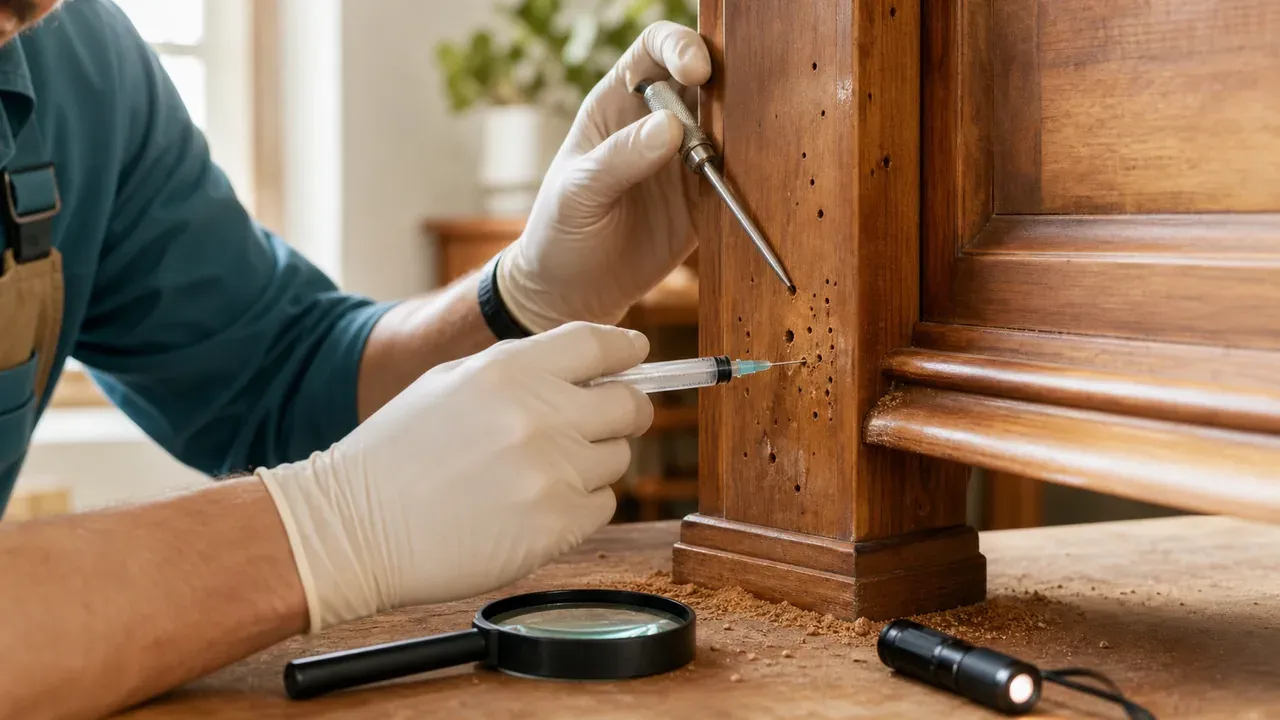
Termites and woodworm are among the most dangerous pests for your home, not because they bite or carry disease, but because they eat the most valuable thing in the home after its people: the furniture, doors and even the building’s structure at times. Worse, they work in silence, so by the time you notice them they’ve been causing damage for a while. In this guide we’ll teach you to spot them early, tell them apart, and know how to treat and prevent them.
Termites and woodworm: why you need to know the difference
Many people confuse the two because the damage looks similar (wood eaten from inside), but these are two completely different types, and each has a different treatment:
- Termites (white ants): a social insect that lives in huge colonies with a queen, eats anything containing cellulose (wood, paper, cardboard), and can come from the ground or a nearby nest.
- Woodworm: a small beetle whose larvae eat the wood from inside, leaving small holes and fine wood powder.
If you identify the type wrong, the treatment will be wrong, which is why the first step is always inspection and accurate identification.
What do termites look like?
Many people search for what termites look like to be sure. Termites aren’t like ordinary black ants:
- Color: light, whitish-cream or light brown, with a soft body.
- Size: the worker is very small, the queen much larger.
- Shape: a broad waist (not pinched like ordinary ants), and straight antennae.
- Flying termites: in certain seasons winged individuals (the reproductive flyers) emerge, and you’ll find discarded wings near windows and lights, one of the clearest signs of their presence.
Sometimes people call it “the white worm” when they see the workers, and ask about white worms suddenly appearing at home, which is usually termites that exposed a nearby nest or infested wood.
Signs of termites
Spotting termites early saves you a big loss. The most important signs:
- Thin mud tunnels on walls, furniture bases or around pipes (termites build mud passages to move safely).
- Discarded wings near windows and light sources.
- Wood that sounds hollow when you tap it, because it’s been emptied from inside.
- A thin surface layer on the wood that breaks easily with a void beneath.
- Powder or frass near the wooden furniture.
Termite damage
Termite damage is not minor:
- Destroying furniture: it eats cabinets, wardrobes, doors and beds from the inside.
- A risk to the building: in advanced cases it can affect structural timber and wooden ceilings.
- Damaging paper and cardboard: books, archives and stored boxes.
- Rapid spread: the colony keeps growing as long as the queen is active.
So termite treatment must target the nest and the queen, not just the visible individuals.
Woodworm: what it looks like and its signs
Now the second type. People search for what woodworm looks like, but the truth is you’ll rarely see the insect itself, because the larvae do the damage from inside the wood. What you’ll see are the signs:
- Small round holes on the wood surface (the adult beetle’s exit holes).
- Very fine wood powder (like flour) under the cabinet, bed or door.
- A faint gnawing sound inside the furniture in the quiet.
- Wood that weakens and crumbles under pressure.
The adult beetle lays eggs in wood cracks, the eggs hatch into larvae that eat the wood from inside for months or years before becoming an adult beetle that emerges from a small hole and repeats the cycle. So woodworm treatment must reach the larvae inside the wood, not a surface spray.
The difference between termites and woodworm
To tell them apart quickly:
- Source: termites usually come from the ground or a big nest; woodworm comes with an infested piece of wood.
- Distinctive sign: termites = mud tunnels and discarded wings. Woodworm = round holes and wood powder.
- The organism: termites are a social insect with a colony and queen; woodworm is a beetle whose larvae are the destroyers.
- Treatment: termites need targeting the nest and queen and sometimes soil treatment; woodworm needs injecting the pesticide into its holes.
Causes of termites and woodworm
- Moisture: termites love damp places, and water leaks attract them.
- Wood touching the ground or damp walls: eases termite access.
- Infested used furniture: the biggest route for woodworm to enter the home.
- Long storage: wood or cardboard stored in a neglected place is an ideal environment.
DIY treatment mistakes
- Spraying pesticide on the wood surface: doesn’t reach termites in the nest or woodworm larvae inside the wood.
- Treating one piece and ignoring the rest: woodworm and termites move, so you must treat and inspect the rest of the furniture.
- Ignoring the moisture source: if you leave the leak, termites return.
- Relying on folk remedies: postpones the problem and lets the damage grow.
Treating termites and woodworm
The right treatment differs by type, but always starts with precise inspection and identification:
Termite treatment
- Identify the nest source and the movement paths.
- Bait/treatment that reaches the colony and queen so it collapses at its roots.
- Preventive treatment for exposed areas and treating moisture sources.
You can learn the details of our termite and ant control and how we target the nest.
Woodworm treatment
- Inject the pesticide into the borer holes themselves to reach the larvae in place.
- Treat the affected pieces and preventively treat the sound pieces.
Details of woodworm treatment and protecting the rest of the furniture.
In both cases, the 3-year guarantee and follow-up matter to confirm the boring has truly stopped.
Preventing termites and woodworm
- Inspect any used wood or furniture well before bringing it home.
- Fix water leaks and reduce moisture, especially around the kitchen and bathroom.
- Keep wood away from contact with the ground and damp walls as much as possible.
- Inspect wooden furniture regularly, especially old pieces and storage.
- At the first sign (wood powder or mud tunnels), act quickly before the infestation grows.
Types of termites: subterranean and drywood
Not all termites are the same, and understanding the type determines the treatment:
- Subterranean termites: the most common and dangerous in Egypt. They live in colonies in the soil and reach the home via mud tunnels, attacking any wood touching the ground or moisture. Their treatment needs targeting the colony and sometimes soil treatment.
- Drywood termites: live inside the wood itself without needing soil or moisture, infesting furniture and doors, and you’ll find coarse grains coming out of small holes.
Identifying the type from its signs makes the plan precise, and that’s done during the inspection.
The termite life cycle and the colony system
Termites are a social insect with a precise system:
- The queen: lives for years and lays thousands of eggs, the heart of the colony. Any treatment that doesn’t reach the queen fails.
- The king: continuously fertilizes the queen.
- The workers: light-colored and soft, they eat the wood, build the tunnels and feed the rest of the colony.
- The soldiers: with a bigger head and strong jaws, they defend the colony.
- The reproductive individuals (flyers): emerge in a certain season with wings to found new colonies.
The key point: if you kill only the visible workers, the colony replaces them quickly as long as the queen is alive. That’s why effective treatment targets the whole colony.
Termite swarming season and when to worry
In warm, humid seasons, the flying termites emerge in large numbers and are drawn to light. If you find a swarm of flying termites or many discarded wings near windows or lamps, it’s a strong sign of a nearby colony trying to found new ones. This is an important time to act quickly before the infestation widens.
Termites and buildings: why prevention during construction matters
Subterranean termites can reach the building’s foundations and timber from the soil. In buildings and villas, treating the soil during construction (before pouring the floors) creates a preventive barrier that stops termites reaching from the ground. If the home is old, treatment is done in other ways depending on the case. The idea is that early prevention is far cheaper than repairing structural damage.
Woodworm: the life cycle and the most vulnerable wood
Woodworm (the wood beetle) passes through a cycle: the adult beetle lays eggs in wood cracks, the eggs hatch into larvae, and the larvae eat the wood from inside for months or years, then turn into an adult beetle that emerges from a small hole and repeats the cycle.
- The most vulnerable wood: old furniture, wood with moisture, and some soft wood types.
- Why do we notice it late? Because all the work is inside the wood, so the holes and powder appear after the larvae have been working for a while.
That’s why effective woodworm treatment injects the pesticide into the borer holes to reach the larvae in place, not a surface spray.
How to inspect your furniture step by step
- Look under the pieces: under the cabinet, bed and table, look for fine wood powder.
- Examine the corners and joints: small round holes = woodworm, mud tunnels = termites.
- Tap the wood: a hollow sound means a void inside.
- Press the suspected areas with your finger: if the wood crumbles easily, there’s internal damage.
- Inspect the damp, dark places: behind cabinets and in storage.
A regular inspection every so often catches the infestation early and saves your furniture.
The role of moisture in attracting termites and woodworm
Moisture is a key factor:
- Subterranean termites love soil and damp wood, and water leaks attract them.
- Woodworm is more active in wood that has moisture.
That’s why fixing leaks and ventilating closed spaces is part of prevention, not a luxury. Dry wood and a ventilated atmosphere greatly reduce the chance of infestation.
Preventive treatment for new and used furniture
- Used furniture: inspect it well before bringing it home, because it’s the biggest route for woodworm to enter.
- New furniture: choose treated wood from a trusted source.
- Preventive treatment: we can treat the sound pieces preventively while treating the affected one, to stop the infestation spreading.
Quick table: termites, ordinary ants, or woodworm?
To tell them apart quickly from the sign:
- Mud tunnels on walls + discarded wings ← subterranean termites.
- Small round holes + fine wood powder ← woodworm.
- A trail of dark insects walking on food with a pinched waist ← ordinary ants (they don’t eat wood, but are annoying and contaminate food, and have their own ant control service).
- Wood with a hollow sound and a surface layer that breaks ← termites working inside the wood.
Common myths about termites and woodworm
- “Termites are like ordinary ants”: wrong, a completely different type with different behavior and treatment.
- “A surface spray is enough”: it doesn’t reach the nest or the larvae inside the wood.
- “The infestation is in one piece only”: it has usually spread, you must inspect the rest.
- “Expensive wood doesn’t get eaten”: any wood containing cellulose can be infested if conditions are right.
When to call a professional immediately
- You saw discarded wings or flying termites in large numbers.
- You found mud tunnels on walls or foundations.
- The powder or holes appeared in more than one furniture piece.
- The home is new and you want preventive treatment for the soil and furniture.
The earlier you act, the more of your furniture you save and the lower the cost.
Advanced signs you must take seriously immediately
If you’ve reached these signs, the infestation has become advanced and needs quick intervention:
- Part of the wood collapsing or a door that falls when you press on it.
- Many mud tunnels on walls or extending from the ground.
- Cracking in the wood with continuous powder gathering beneath it.
- The flying termites returning every season in the same spot.
These aren’t cases to postpone, because the damage grows fast and can reach harder, more expensive places to repair.
Termites in gardens and trees
In villas and ground floors with a garden, subterranean termites may have their nest in the soil and attack:
- Tree trunks and woody plants.
- Wooden fences and pergolas.
- Any wood touching the ground like the bases of outdoor seating.
And from the garden it can reach inside the home, which is why treating the outer perimeter and soil is an important part for villas.
The difference in danger between termites and ordinary ants
Ordinary ants (the black/brown ones that trail to sugar) are annoying and contaminate food, but they don’t eat wood, so their danger to furniture is limited. Termites, on the contrary, their main danger is to wood and buildings. That’s why the treatment differs: ordinary ants with bait that reaches the queen in its nest (that’s the topic of ant control), and termites by targeting the colony and treating the wood and soil.
Why is used furniture dangerous?
Most woodworm infestations enter the home with a used furniture piece containing larvae or eggs, and sometimes a piece of wood or an old door. The piece may look sound from outside while infested inside. That’s why inspection before bringing it in matters, and it’s best to preventively treat any used wood entering a home with clean furniture.
The cost of treating termites and woodworm
The price varies depending on:
- The pest type (subterranean/drywood termites, woodworm).
- The infestation size and the number of pieces affected.
- Whether it needs soil or perimeter treatment (for villas and ground floors).
- The preventive treatment for the rest of the furniture.
We inspect first and identify the type and size, then tell you the price before any work. Early prevention is always cheaper than repairing major damage.
Flying termites: people’s common questions
- “I saw flying termites at home, what does it mean?” Usually there’s a nearby colony trying to breed. Even if the flyer dies, the colony may still be present.
- “What are these discarded wings?” They’re the flying termites’ wings after they shed them, one of the clearest signs of termites.
- “What do I do when I see a swarm?” Turn off the light attracting them, don’t spray them randomly so you don’t scatter them, and call a specialist to find the source.
After treatment: how to confirm the infestation stopped
- No new wood powder appearing under the furniture.
- No new mud tunnels being built.
- No flying termites in the following season.
- The inspection at follow-up finds no activity.
The 3-year guarantee gives you reassurance: if any activity appears during the guarantee period, we re-treat. And if you have more than one concern at home, you can combine this with the comprehensive service.
Frequently asked questions
How do I know it’s termites and not ordinary ants?
Termites are light-colored, have a broad waist, make mud tunnels, and leave discarded wings. Ordinary ants are darker, with a pinched waist, and don’t make mud tunnels.
White worms appeared at home suddenly, what do I do?
It’s most likely termites that exposed a nearby nest or infested wood. Don’t try to spray it randomly, because that can scatter the colony. Call us to find the source and treat it correctly.
Do I have to throw away furniture infested with woodworm?
In most cases no; injection stops the boring and preserves the piece. The important thing is to treat the rest of the furniture too, because woodworm moves.
How long does treatment last?
With the right treatment, a guarantee and follow-up, the result lasts a long time, provided you address moisture sources and inspect used furniture.
Do termites bite humans?
Termites’ danger isn’t in biting, it’s to wood and buildings. They rarely deal with humans directly, but their material damage to furniture and doors can be very large if you delay.
Does woodworm spread to all the furniture?
Yes, it can. The adult beetle flies and lays eggs in other pieces, so the infestation spreads if untreated. That’s why we treat the affected piece and preventively treat the sound pieces.
Does engineered wood (MDF/plywood) get infested?
Woods containing cellulose are exposed, but the degree varies by type and treatment. Old, damp natural wood is more exposed than well-treated wood.
Does the sun kill woodworm?
Exposing a small piece to high heat can help, but it isn’t practical for large furniture or a deep internal infestation. Injection reaches the larvae in place, and that’s the most reliable.
How long does termite treatment take?
It varies by type, infestation size and whether soil treatment is needed. The inspection determines the duration and plan, and the guarantee and follow-up confirm the boring has truly stopped.
Quick guide: a plan to protect your furniture
- Inspect your furniture regularly (wood powder, holes, mud tunnels, hollow sound).
- Identify the type (termites or woodworm) because the treatment differs.
- Treat correctly: targeting the colony for termites, injecting the holes for woodworm.
- Do preventive treatment for the rest of the furniture and the sound pieces.
- Treat the moisture and keep wood away from damp ground.
- Follow up and confirm the infestation stopped under the guarantee.
From our field experience with termites
The most common mistake we see is people noticing wood powder or a mud tunnel, thinking it’s minor and postponing, and after months the boring has reached other pieces. When you see mud tunnels, know there’s an active colony behind them, and time is a decisive factor.
Tips from the field:
- Don’t break the mud tunnel, clean it and walk away, that makes the termites build another path. Leave it for the technician to use it to reach the colony.
- Inspect the spots touching the ground and the damp ones first, that’s the favorite starting point.
- In villas, the outer perimeter and the soil matter just as much as the inside.
Termites and moisture in kitchens and bathrooms
Kitchens and bathrooms are the places with the most moisture and leaks, which attracts subterranean termites to the nearby wood (cabinets under the sink, doors). If you have a cabinet under the kitchen sink that gets wet, inspect it regularly. And fixing the leak is part of the solution, not just spraying.
How long do termites live?
The colony can live for many years as long as the queen is alive, which is why treatment must target the colony, not the visible individuals.
Can I treat termites myself?
Surface spraying doesn’t reach the colony and can scatter it to other places. Reliable treatment needs experience in identifying the source and targeting the colony, and that’s specialized work.
The most vulnerable wood and places
- Old and used furniture: the biggest source of woodworm.
- Wood touching the ground or damp walls: a favorite entry for subterranean termites.
- Old wooden doors and windows, especially those near moisture.
- Storage rooms and basements with stored wood or cardboard and poor ventilation.
- Pergolas and wooden fences in gardens.
Knowing these places makes your inspection focused and effective.
Mistakes that prolong the termite and woodworm problem
- Postponing action at the first sign.
- A surface spray that doesn’t reach the colony or the larvae.
- Treating one piece and ignoring the rest.
- Ignoring the moisture source.
- Bringing in used furniture without inspection.
Avoiding them protects your furniture and makes the treatment more successful.
What’s the difference between termites and flying termites?
The flyer is the same type but the reproductive individuals that emerge with wings in season to found colonies. Their appearance is a sign of a mature colony nearby.
Do termites affect gypsum and paint?
Termites look for cellulose (wood and paper), but they can pass behind gypsum and wallpaper to reach the wood, so you sometimes find their traces on these surfaces.
After how many days do termites disappear from treatment?
They start dropping gradually as the effect reaches the colony, and full disappearance takes time depending on the colony size. Follow-up confirms the colony has truly collapsed.
A practical example: how we handle termites in a room
When we find mud tunnels on a wall near a cabinet, we trace the tunnel to the source without breaking it, and determine whether the source is from the ground (subterranean termites) or from infested wood. We target the colony with the suitable method, treat the affected wood and preventively treat the neighboring pieces. And if there’s moisture, we recommend fixing it because it’s a key cause. This stops the boring and protects the rest of the furniture.
Do termites appear on upper floors or only the ground floor?
Subterranean termites start from the ground, but they can climb via walls and tunnels to higher floors if they find wood and moisture, so they can appear on any floor.
Can new furniture get woodworm?
It can, especially if the wood isn’t well treated or was stored in an infested place. Choosing a trusted source and inspecting the wood before buying greatly reduces this.
Detailed prevention tips against termites and woodworm
- Inspect any furniture or used wood before bringing it home, and preferably give it preventive treatment.
- Fix water leaks immediately and reduce moisture around the wood.
- Keep wood and cardboard away from contact with the ground and damp walls.
- Ventilate storage rooms and basements and don’t pile wood or paper on the floor.
- Inspect wooden furniture regularly, especially old pieces and those near the kitchen and bathroom.
- At the first sign (powder, holes, mud tunnels), act quickly before the infestation grows.
Regular prevention is far cheaper than repairing major damage or replacing furniture entirely.
Conclusion
Termites and woodworm are silent enemies, and speed in spotting and treating them is the difference between a simple repair and losing an entire set of furniture. Know the signs, inspect your furniture regularly, and at the first sign call us. The German Quality team is available 24/7 across all governorates of Egypt with a 3-year guarantee.